


In Situ Plasma-DRIFTS Reaction Cell
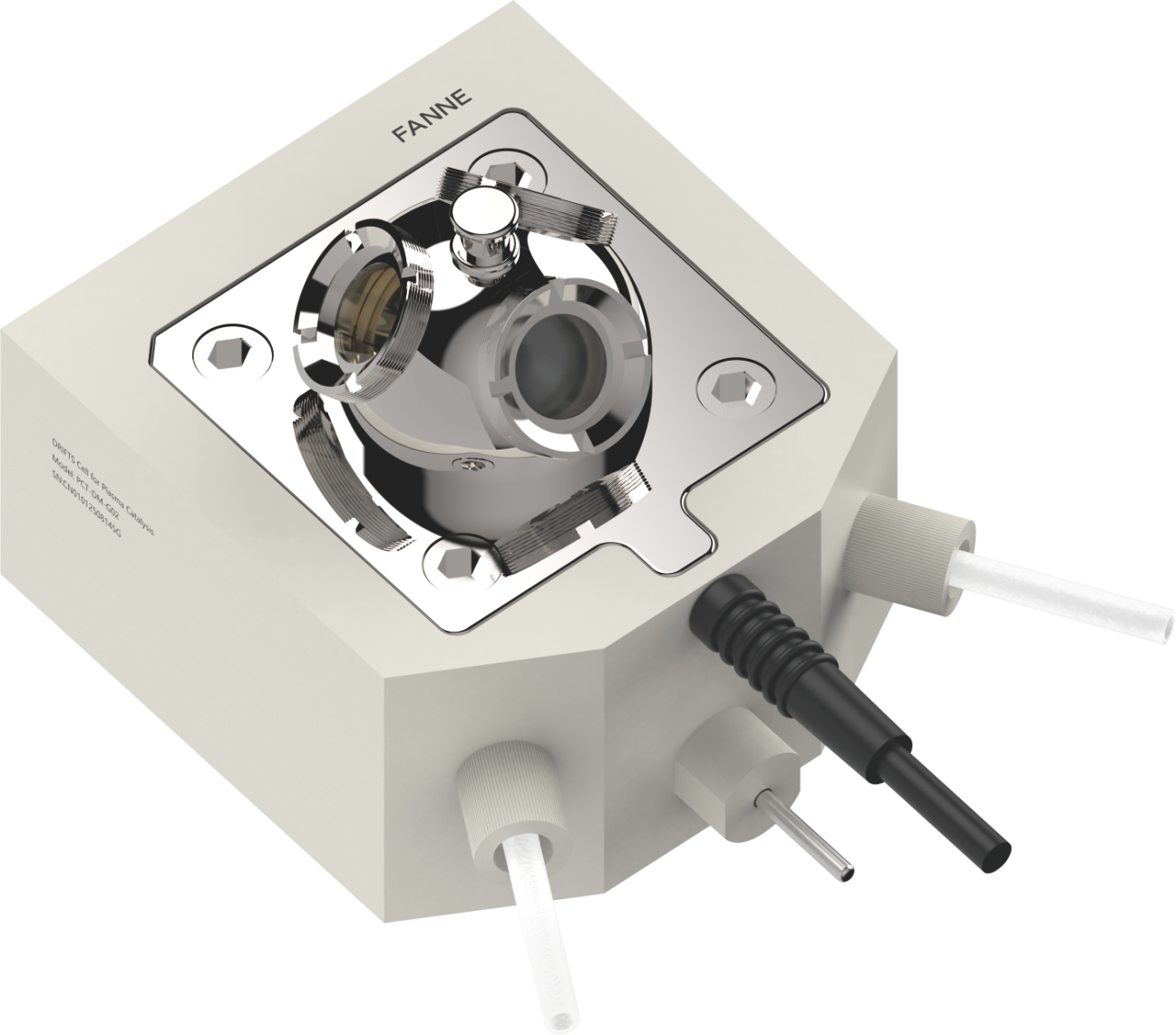
The PCT-DM-G02 in situ plasma-DRIFTS reaction cell is purpose-built for mechanistic studies of plasma catalysis. Itcombines diffuse reflectance infrared Fourier transform spectroscopy (DRIFTS) with low-temperature plasma discharge, enabling real-time in situ monitoring of gas-solid interfacial species during reaction. The cell integrates discharge electrodes, a catalyst sample stage, IR windows and a visual observation window, collecting high-quality infrared spectra under a stable plasma environment while dynamically tracking reactant adsorption and activation, the evolution of key intermediates and product formation. The system is compatible with mainstream FTIR spectrometers and can be coupled with SSITKA and other advanced kinetic techniques, providing strong support for revealing plasma-catalytic reaction pathways, active-site evolution and structure-performance relationships.
- In situ coupling: integrates low-temperature plasma with DRIFTS for synchronous monitoring of gas-solid interfacialspecies.
- Stable discharge: co-designed electrodes, sample stage and optical windows ensure stable discharge and IR acquisition.
- Kinetics-ready: couples with SSITKA, isotope switching and related techniques for reaction pathway and intermediate evolution studies.
In Situ Plasma-DRIFTS Reaction Cell
(Plasma-Thermal Catalysis Coupling)
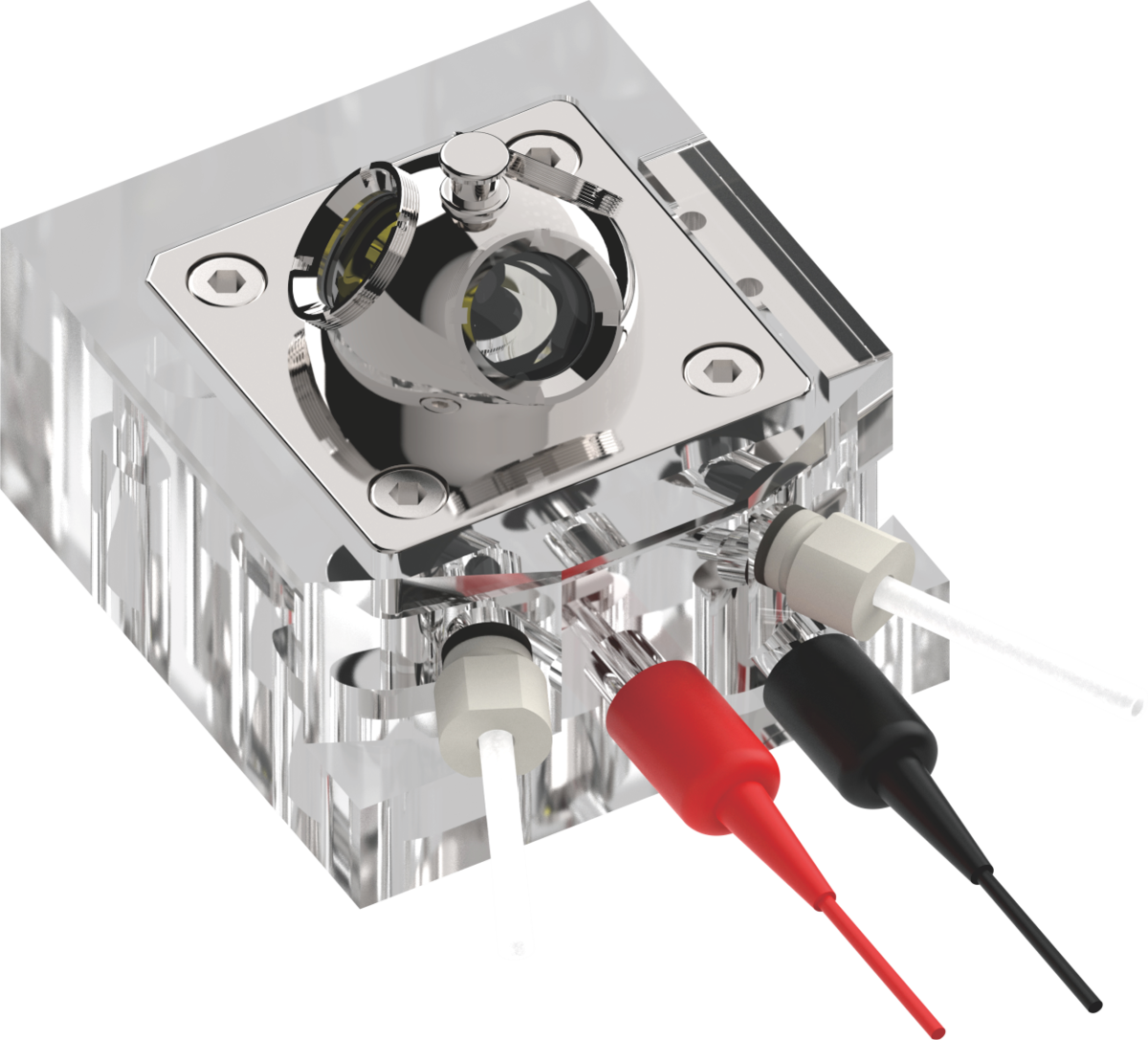
Developed from the PCT-DM-G02, the PCT-DM-G04 is a temperature-controllable in situ plasma-DRIFTS reaction cell builtaround a high-purity quartz body. It enables in situ measurements under heating, cooling and isothermal conditions from room temperature up to 450 °C. The system supports independent regulation of the temperature field and the plasma discharge field, and can be used to study how thermal catalysis, plasma catalysis and their synergy affect reaction pathways, surface intermediate evolution and catalytic performance. The cell provides an advanced in situ characterization platform for elucidating plasma-thermal catalytic coupling mechanisms.
- Controllable temperature: supports in situ plasma-DRIFTS measurements under heating, cooling and isothermalconditions.
- Field-heat decoupling: independent regulation of temperature and discharge fields helps distinguish thermal effects from plasma effects.
- Low-background quartz: high-purity quartz body combines chemical stability, IR transparency and low background signal.
