


In situ plasma DRIFTS
Purpose & Applications
In situ plasma DRIFTS is a characterisation technique for investigating catalyst surface processes under true discharge conditions. It enables real-time monitoring of surface adsorbates, key intermediates, and product evolution, providing direct insight into plasma–catalyst interactions and supporting reaction pathway analysis, active-site investigation, mechanistic studies, and catalyst design. The technique is applicable to a wide range of gas–solid plasma catalytic systems, including CO2 hydrogenation, ammonia synthesis, methane activation, VOC abatement, small-molecule activation, and plasma–thermal or plasma–photocatalytic coupled reactions, and is widely used for catalyst evaluation, intermediate identification, mechanistic investigation, and dynamic monitoring of complex reaction processes.Instrument Model
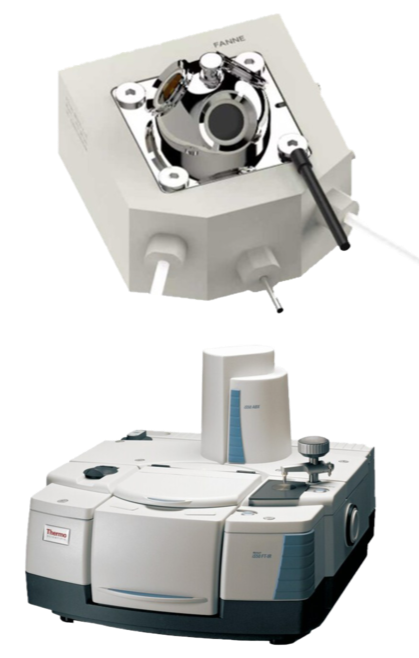
In Situ Plasma DRIFTS Cell (FANNE Technology): PCT-DM-G02
FTIR Spectrometer (Thermo Fisher Scientific): Nicolet iS50
Mass Spectrometer (Anyeep): GMA6500
Sample Requirements
1 | Sample Type
Suitable for powdered, granular, or supported solid catalysts with adequate diffuse reflectance in the infrared region. Typical samples include metal oxides, zeolites, MOFs, supported metal catalysts, and other porous solid materials.
2 | Sample Amount
A sample amount of 100–500 mg is generally recommended for each measurement. The actual amount may be adjusted depending on the cell size, test mode, and sample packing density. For materials with lower density or weaker reflectance, a larger amount may be required.
3 | Particle Size
Samples should have a relatively uniform particle size. Sieving to 40–80 mesh or grinding to a consistent particle size is generally recommended. Oversized particles may affect sample packing and spectral reproducibility, while excessively fine powders may influence gas transport or lead to sample loss.
