


In Situ High-Temperature XRD
Purpose & Applications
In situ high-temperature X-ray diffraction (XRD) is a powerful technique for real-time monitoring of phase composition, crystal structure, and lattice parameter changes under controlled heating conditions. It provides direct insight into structural evolution during heating, reaction, or atmosphere treatment, and is widely used to study phase transitions, crystallisation, thermal stability, grain growth, and reaction-induced structural changes. The technique is broadly applicable to catalytic materials, metal oxides, ceramics, minerals, energy materials, and other functional materials, and is widely used for calcination studies, phase transformation analysis, thermal treatment characterisation, in situ reaction tracking, and high-temperature stability evaluation, particularly in research on catalyst activation, support structure evolution, redox processes, and structural changes under realistic high-temperature reaction conditions.
Instrument Model
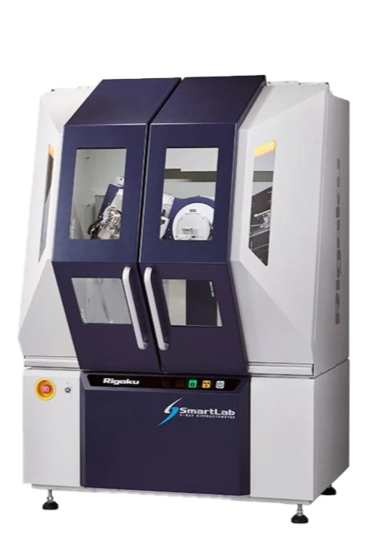
X-ray Diffractometer (Rigaku): SmartLab Multipurpose X-ray Diffractometer
Sample Requirements
1 | Sample Type
Suitable for a wide range of sample forms, including powders, bulk materials, films, coatings, and plate-like samples. Typical materials include catalyst powders, metals, ceramics, minerals, energy materials, and composite materials.2 | Sample Amount
For powder samples, at least 100 mg is generally recommended to allow for sample loading, repeat measurements, and condition optimisation. For bulk or film samples, a minimum size of 10 mm × 10 mm is recommended, with the surface kept as flat as possible. For valuable or limited samples, the required amount may be adjusted based on the specific test needs.3 | Particle Size
Powder samples should be finely ground and as uniform as possible, with minimal agglomeration or large particles. Non-uniform particle size may affect peak shape, peak intensity, and test reproducibility, so good sample homogeneity and representativeness are recommended.
